
| Business Type | Manufacturer, Supplier, Trader |
| Cultivation Type | Natural |
| Packaging Size | 10Kg, 25Kg |
Botanical name:Curcuma longa L.
Family: Zingiberaceae (Ginger family)
Form:
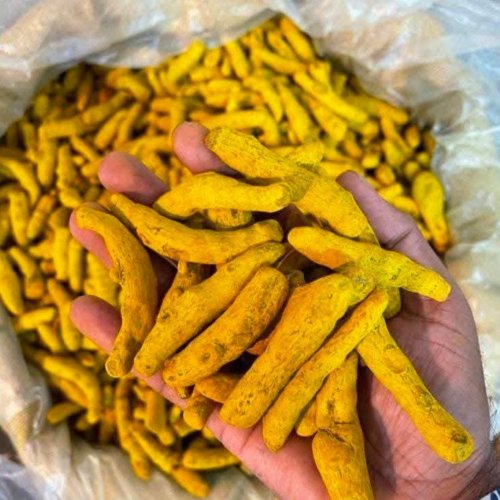
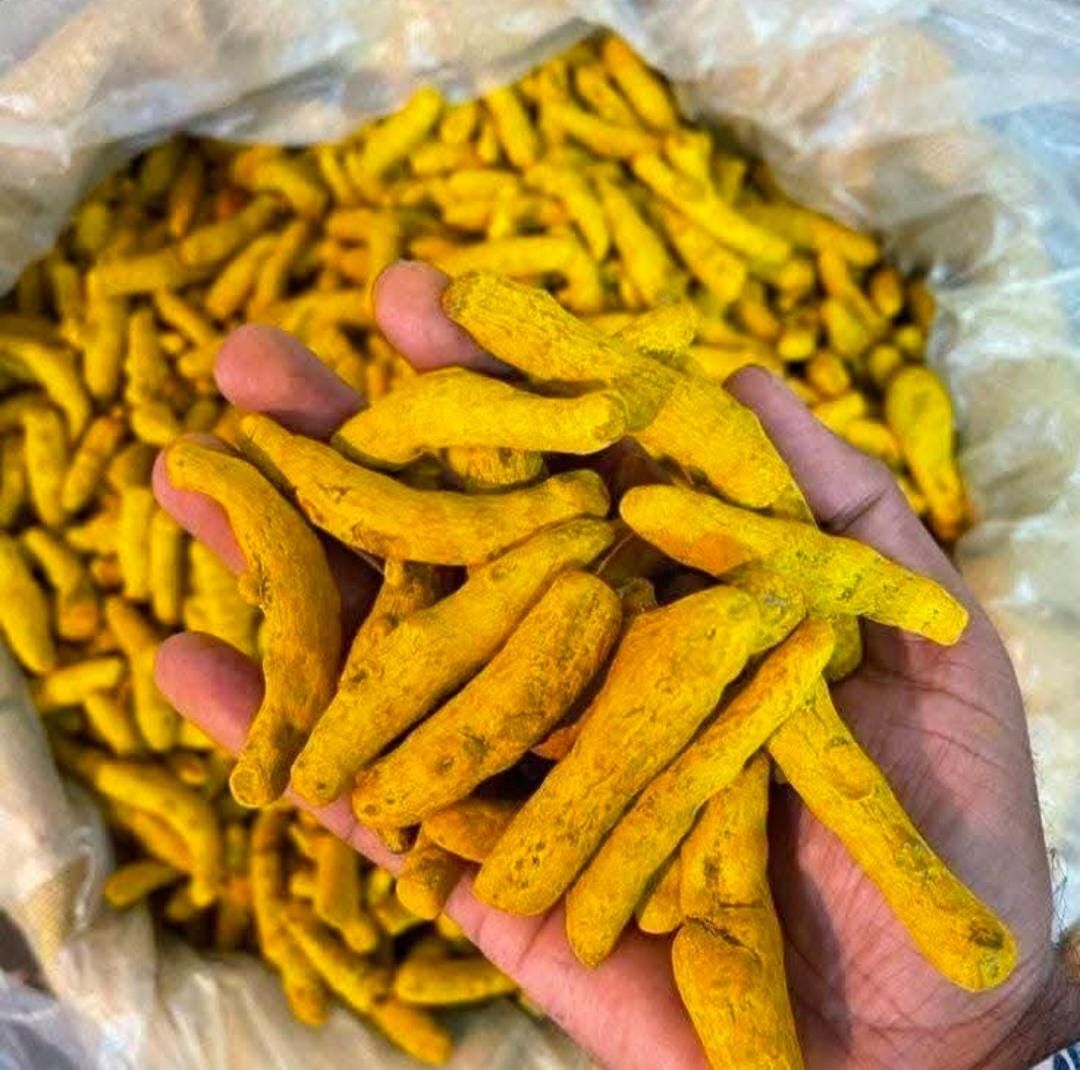
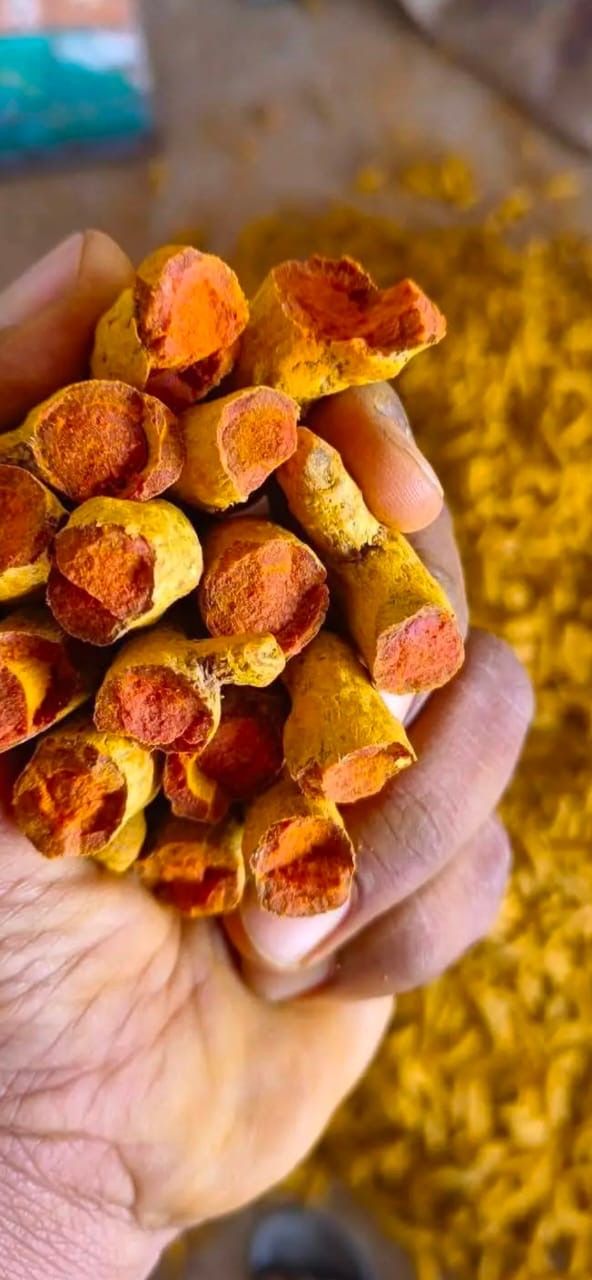
Turmeric fingers are the whole, dried rhizomes (underground stems) of the turmeric plant after cleaning, boiling, and drying. They are not ground into powder—the “finger” refers to the shape of the individual rhizome pieces.
Appearance:
- Shape: Cylindrical and slightly curved, resembling fingers (hence the name).
- Size: Usually 2–8 cm long and 1–2 cm thick.
- Surface: Rough and wrinkled, with rings or nodes visible.
- Color:
- Outer surface: Yellowish to orange-brown.
- Inner surface (when broken): Deep orange to reddish-yellow.
- Texture: Hard and brittle when dry; breaks with a short, starchy fracture.
- Aroma: Distinct, earthy, and slightly peppery with a warm, spicy fragrance.
- Taste: Bitter, slightly pungent, and warm.
Processing:
After harvesting, rhizomes are:
- Boiled or steamed to remove raw odor and gelatinize starch.
- Dried in the sun or mechanically until fully hard.
- Polished manually or mechanically to remove rough outer layers.
Grades:
Varieties and grades depend on origin, curcumin content, and appearance. Examples:
- Alleppey Finger (India) – High curcumin (5–6%), deep orange color.
- Erode and Salem Finger (Tamil Nadu, India) – Bright yellow, moderate curcumin (3–4%).
- Nizamabad or Rajapuri Finger – Lighter yellow, aromatic.
Uses:
- Spice and coloring agent in food (especially curry powders).
- Ingredient in traditional medicine and cosmetics.
- Source of curcumin, the main bioactive compound with antioxidant and anti-inflammatory properties.
Looking for "Turmeric Finger" ?
Kilogram